Plant Everything Together: The Balinese Polyculture Method That's Quietly Outgrowing American Garden Rows

Photo by Photo by Luke Gallegos on Unsplash on Unsplash
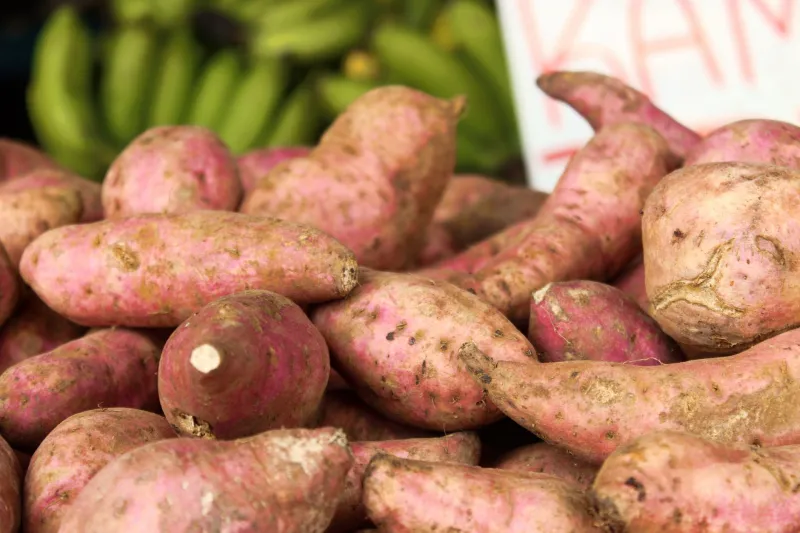
If you've ever visited a traditional Balinese home garden, your first instinct might be that it's chaotic. Lemongrass growing alongside papaya. Turmeric tucked under a banana tree. Sweet potato vines threading between rows of corn. Chilis, shallots, and pandan all within arm's reach of each other.
It looks unplanned. It is absolutely not.
What you're looking at is one of the most sophisticated small-scale food production systems ever developed — a centuries-old approach to growing called polyculture, and it's starting to show up in American backyards in a big way.
What Polyculture Actually Means
Polyculture is exactly what it sounds like: growing multiple crop species in the same space at the same time. It's the direct counterpoint to monoculture, which is how most American commercial agriculture — and most American home gardens — operate. Neat rows of one thing, then another row of something else, then another.
Monoculture is tidy and easy to mechanize. It's also ecologically fragile. A single pest or disease can wipe out an entire planting. The soil gets depleted in specific ways because the same root systems keep working the same depths. Biodiversity collapses. You end up needing more inputs — fertilizer, pesticide, water — to maintain yields that a more complex system would sustain naturally.
Balinese polyculture flips this model. Different plants at different heights, with different root depths, different nutrient needs, and different relationships to insects and soil microbes, all working together in the same patch of ground.
The Balinese Pekarangan as a Design Principle
The traditional Balinese home garden — called a pekarangan — is organized around the concept of layered abundance. There's usually a canopy layer of fruit trees, a mid-level layer of shrubs and large herbs, a ground-level layer of vegetables and root crops, and a creeping or climbing layer that uses vertical space. Every layer serves multiple functions: food production, shade, pest suppression, soil building, and often ceremonial or medicinal use.
What makes this relevant to American gardeners isn't that you need to recreate a Balinese garden exactly. It's that the underlying logic — stack functions, maximize relationships between plants, let the system do some of the work — translates directly into any climate and any backyard.
What American Gardeners Are Finding
Across the country, home gardeners and small-scale farmers who've started experimenting with polyculture are reporting results that feel almost counterintuitive at first.
Rachel Okonkwo, who gardens on a quarter-acre lot in western North Carolina, switched from traditional row gardening to a polyculture layout three years ago after reading about Balinese and indigenous American mixed-planting practices. "The first year I was skeptical because it looked messy," she says. "By the second year I had more tomatoes than I knew what to do with, I barely sprayed anything, and the soil smelled incredible."
That last detail — the smell of the soil — is actually a meaningful indicator. Healthy, biologically active soil has a distinct earthy aroma driven by a compound called geosmin, produced by actinobacteria. Polyculture systems tend to support greater microbial diversity because different plants feed different microbial communities through their root exudates. More diversity below ground means more resilience above it.
Small farms are catching on too. At a market garden outside Asheville, farmer and educator Dom Perreira has been piloting Balinese-influenced polyculture blocks alongside conventional rows for four seasons. "Our pest pressure on the polyculture blocks is noticeably lower," he says. "We think it's partly visual disruption — insects that target specific crops have a harder time finding them when they're interspersed with other plants — and partly that we're supporting more predatory insect populations."
How to Start Designing Your Own Plot
You don't need a quarter-acre to try this. A 4x8 raised bed is enough to start applying polyculture principles.
Think in layers, not rows. Choose one taller plant (a tomato, a pepper plant, a small trellis of beans) to anchor the bed. Add mid-height companions around it. Fill in the lower level with ground-hugging herbs or greens. Use the edges for trailing plants or root crops.
Pair by function, not just aesthetics. Classic combinations work for reasons: basil near tomatoes seems to deter aphids and thrips while improving pollinator activity. Marigolds around the perimeter suppress nematodes and attract beneficial insects. Nasturtiums act as trap crops for aphids, pulling them away from your vegetables. These aren't old wives' tales — there's a growing body of research supporting companion planting mechanisms.
Include something that fixes nitrogen. Legumes — beans, peas, clover — have a symbiotic relationship with soil bacteria that converts atmospheric nitrogen into a plant-available form. Including at least one legume in every polyculture block means you're building fertility into the system rather than depleting it.
Embrace vertical space. Balinese gardens use vertical space instinctively because land is at a premium. Even in a generous American backyard, trellising climbing beans or cucumbers over a lower-growing crop dramatically increases your production per square foot without crowding.
Let some things go to flower. One of the most counterintuitive shifts for American gardeners trained to harvest everything promptly is allowing some herbs and vegetables to bolt and flower. Those flowers feed pollinators and beneficial predatory insects that make the whole system more stable.
The Bigger Picture
Polyculture isn't just a gardening technique. It's a different way of thinking about what a garden is for. The Balinese model doesn't separate food production from ecology — it treats them as the same project. The garden feeds the family and sustains itself at the same time.
As American gardeners face increasingly unpredictable weather, rising input costs, and growing interest in food sovereignty, that integration starts to look less like a charming cultural artifact and more like practical wisdom.
The rows were always optional. The yields, it turns out, were not.