Six Balinese Pantry Ingredients You've Never Heard Of (That Outperform Half Your Supplement Cabinet)
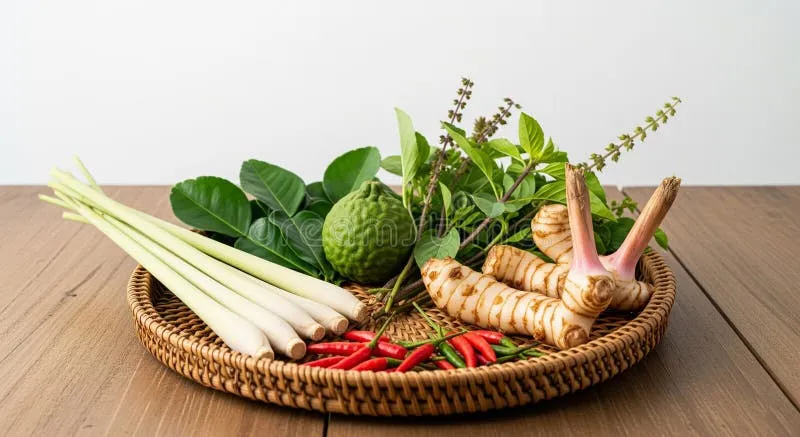
Photo: Balinese spices herbs roots galangal lemon basil tropical market ingredients flat lay, via thumbs.dreamstime.com
Walk into any health food store in the US right now and you'll find an entire wall dedicated to turmeric. Golden milk lattes. Curcumin capsules. Anti-inflammatory gummies shaped like tiny suns. We've collectively decided that turmeric is the answer, and the supplement industry has been happy to agree.
But here's the thing: in Bali, turmeric is basically the baseline. It's the starting point of a much deeper and more nuanced pharmacopoeia — a living tradition called usada that Balinese healers, known as balian, have been refining for over a thousand years. And most of the ingredients that tradition relies on haven't made it to your spice aisle yet.
That's a missed opportunity worth correcting. These aren't exotic curiosities. They're functional, flavorful, and increasingly available to American home cooks willing to look a little further than the grocery store endcap. Here's your introduction to six of them.
1. Kencur (Kaempferia galanga) — The Spice That Thinks It's a Medicine
Kencur is one of those ingredients that Balinese cooks reach for almost unconsciously, the way an American cook might grab garlic. It's a small rhizome in the ginger family, but its flavor profile is entirely its own — earthy, slightly camphorous, with a warm bite that sits somewhere between galangal and black pepper.
In Balinese jamu (traditional herbal tonic) tradition, kencur is a cornerstone ingredient for respiratory support, digestive relief, and energy. Modern pharmacological research has started catching up: studies published in journals including the Journal of Ethnopharmacology have identified significant antimicrobial, anti-inflammatory, and antioxidant activity in kencur extracts, with compounds like ethyl p-methoxycinnamate showing particular promise.
How to use it: Grate fresh kencur (available at most Asian grocery stores and online through importers like ImportFood.com) into a rice dish, a coconut-based soup, or a simple wellness tea with honey and lime. Start small — it's potent.
2. Salam Leaf (Syzygium polyanthum) — The Bay Leaf's More Interesting Cousin
If you've ever used bay leaves in a braise or a stew, you already understand the concept of salam leaf — but the comparison undersells it considerably. Salam is a fragrant Indonesian herb with a subtle, slightly floral depth that American bay simply doesn't have, and its medicinal profile is considerably more robust.
Traditional Balinese and Javanese medicine has long used salam leaf to manage blood sugar, support liver function, and address hypertension. A 2014 clinical study published in the Journal of Diabetes & Metabolic Disorders found that salam leaf extract produced significant reductions in blood glucose levels in Type 2 diabetic patients over a 14-day period. That's a meaningful result from something that doubles as a cooking herb.
How to use it: Drop two or three dried salam leaves into rice while it cooks, add them to bean dishes and slow-cooked meats, or steep them for a mild herbal tea. Dried salam leaf is available through specialty Indonesian grocery suppliers and on Etsy shops run by Indonesian importers.
3. Galangal (Alpinia galanga) — Not Ginger. Seriously, Stop Substituting.
Yes, galangal is related to ginger. No, they are not the same thing, and swapping one for the other in a recipe is the culinary equivalent of substituting oregano for rosemary and calling it close enough. Greater galangal has a sharper, more piney, almost citrusy character — and its bioactive compounds are distinct enough that its traditional uses in Balinese medicine don't overlap neatly with ginger's at all.
Balinese healers have historically used galangal root for everything from nausea and motion sickness to fungal infections and rheumatic pain. Research supports a surprising range of these applications, with studies identifying strong antifungal activity and significant inhibition of inflammatory pathways via galangin, one of its primary flavonoids.
How to use it: Fresh galangal is increasingly available at Asian supermarkets across the US. Use it in homemade curry pastes, braises, and broths. Dried galangal powder works well in spice blends and can be stirred into smoothies.
4. Temulawak (Curcuma zanthorrhiza) — The Turmeric Upgrade
Think of temulawak as turmeric's more potent, less famous sibling. Also a member of the Curcuma family, temulawak has a higher concentration of curcuminoids than common turmeric and contains xanthorrhizol, a compound with demonstrated hepatoprotective (liver-protecting) properties that turmeric doesn't offer in the same way.
In Indonesia, temulawak is one of the most widely consumed medicinal plants — used in commercial jamu formulations, prescribed by traditional healers for liver and gallbladder complaints, and given to children as a general tonic. Indonesian pharmaceutical companies have been studying it seriously for decades; Western research is only beginning to catch up.
How to use it: Temulawak powder can be substituted for turmeric in most applications and used in golden milk, soups, and spice rubs. Look for it through Indonesian specialty food suppliers online, or from herb importers like Mountain Rose Herbs, which has begun stocking it.
5. Andaliman Pepper (Zanthoxylum acanthopodium) — The Numbing Spice You Didn't Know You Needed
AndaLiman is the Batak (North Sumatran) cousin of Sichuan peppercorn, and if you've ever experienced that electric, tongue-tingling sensation from a good mapo tofu, you already have a rough idea of what you're in for. But andaliman has its own distinct citrusy, almost floral quality, and its traditional medicinal applications are fascinating.
Used across Sumatra and parts of Bali as a digestive stimulant, carminative, and antispasmodic, andaliman contains hydroxy-alpha-sanshool — the same compound responsible for Sichuan pepper's characteristic numbing effect — as well as limonene and other terpenes with anti-inflammatory and antimicrobial properties.
How to use it: Crush andaliman lightly and add to marinades, grilled fish, or vegetable stir-fries. It's increasingly available through specialty spice retailers like Burlap & Barrel and The Spice House.
6. Daun Kemangi (Lemon Basil) — The Herb That Belongs in Everything
Lemon basil is the one ingredient on this list that you might actually already have access to without knowing it. It grows easily in American gardens and containers, and yet it remains almost entirely absent from mainstream American cooking — which is a genuine shame, because it is extraordinary.
In Bali, kemangi is eaten raw, scattered over grilled fish and rice dishes, and used in ritual offerings. It's also a staple of traditional wellness practice: the essential oil contains high concentrations of citral and linalool, compounds with documented antimicrobial, anxiolytic (anti-anxiety), and anti-inflammatory effects. A handful of fresh kemangi on your dinner plate is, in a very real sense, a small act of preventive medicine.
How to use it: Treat it like regular basil but expect something brighter and more aromatic. Scatter it over grilled shrimp, fold it into fresh rice salads, or muddle it into a sparkling water for an herbal afternoon drink. Seeds are widely available from seed suppliers like Baker Creek Heirloom Seeds — it grows fast and prolifically.
The Bigger Picture
None of these ingredients are magic bullets, and we're not suggesting you throw out your fish oil. What we are suggesting is that the Balinese approach to wellness — building medicinal value directly into everyday cooking rather than segregating it into supplement form — is both more sustainable and more pleasurable than anything a capsule can offer.
These plants have been cultivated, refined, and passed down through generations of Balinese farmers and healers who understood something that modern wellness marketing keeps trying to reinvent: the best medicine is the kind that also makes your food taste extraordinary.
Your pantry is a garden waiting to happen. Start planting.