The Leaf Is the Lid: Why Banana Leaves Beat Foil for Steaming at Home
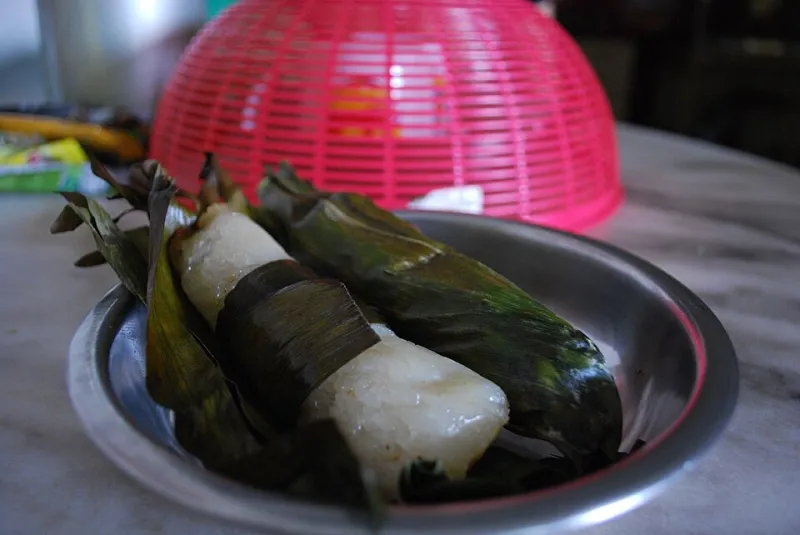
Photo: Alpha from Melbourne, Australia, CC BY-SA 2.0, via Wikimedia Commons
If your only experience with steamed fish is a fillet on a plate under foil, you have been eating in a tiny flavor box. In Bali, fish, rice, vegetables, and spiced pastes are often wrapped in banana leaves before cooking. The leaf is not decoration. It is a lid, a steamer basket, and a perfume all at once.
This is the practical version of a technique behind dishes like pepes, where fish or mushrooms are mixed with spices and herbs, wrapped in banana leaf, and steamed or grilled. The result is not smoky in the same way as foil on a grill. It is greener, softer, and more aromatic. In 2026, as more American home cooks look for ways to cut foil and plastic without buying another appliance, the banana leaf deserves a place next to parchment paper.
What the leaf actually does
A banana leaf is thick, flexible, and slightly waxy. When you wrap food in it and apply heat, the leaf holds in steam while protecting the food from direct heat. It also releases a mild vegetal aroma. That aroma is subtle—not a punch of banana flavor—but it rounds out fish, rice, and spiced mixtures in a way that foil cannot.
Foil is excellent at conducting heat, but it can give acidic or salty foods a metallic edge. Plastic wrap is not meant for high heat. Parchment is good, but it is thin and does not have the same moisture-holding body. Banana leaves sit in a useful middle ground: sturdy, food-safe, and compostable.
In Bali, the technique is also cultural. Leaf wrapping shows up in everyday cooking and in ceremonial food, where the package itself matters. That context is worth respecting. This is not a trendy hack. It is a long-standing kitchen method.
How to wrap food in a banana leaf
Fresh banana leaves are stiff and can crack. Frozen leaves are more pliable and are what most American cooks will find. Thaw them completely, then wipe them clean. To make them flexible, pass the leaf quickly over a gas flame, a hot electric burner, or a dry skillet for a few seconds. It will soften and turn slightly glossy. Do not leave it in one spot or it will scorch.
Cut the leaf into a rectangle large enough to fold around your food with an overlap. Put a spoonful of rice, fish, or vegetables in the center. Add herbs, sliced lemongrass, lime leaves, or a spoon of spice paste. Fold the long sides over the filling, then fold the short ends under to make a packet. Tie it with kitchen twine or secure it with a toothpick. If you are worried about leaks, line the leaf with a small piece of parchment before adding the food.
Steam the packets in a bamboo steamer or a metal steamer basket for the time your food needs. A thin fish fillet may take eight to ten minutes. A dense rice packet takes longer. Grilled packets work too: place them over medium heat and turn once, letting the leaf char slightly without burning through.
A simple banana-leaf fish packet for a US kitchen
Use any firm white fish you trust. For two packets, mix a tablespoon of minced shallot, a teaspoon of grated ginger, a chopped bird's eye chile if you like heat, a handful of cilantro, a squeeze of lime, and a pinch of salt. Spoon the mixture over two fish fillets. Wrap each fillet with a few slices of lemongrass and a lime leaf if you have one. Steam for eight to ten minutes, until the fish flakes. Open the packet at the table. The steam that escapes is the point.
The same method works for mushrooms with a little coconut milk, for sticky rice with black beans, or for vegetables tossed with a Balinese base spice paste. The leaf keeps everything moist and keeps the spices from scorching.
Smart substitutions when banana leaves are not available
Frozen banana leaves are sold in many Asian groceries and larger US supermarkets. If you cannot find them, corn husks are a good stand-in for smaller packets, especially for fish or tamales-style fillings. Parchment paper is the most accessible option: use a double layer, fold it into a packet, and crimp the edges. It will not perfume the food the way a leaf does, but it steams beautifully and composts or recycles easily.
Do not use plastic wrap in the steamer. Do not use leaves you are not sure are food-safe. And do not eat the banana leaf itself—it is a wrapper, not a vegetable.
The larger lesson is simple. A leaf is not a lesser tool than foil. It is a different one. It asks you to slow down, fold, and pay attention to the package. That is often where better flavor starts.