A Counter, a Recipe, a Regular: How Warungs Rewrite the American Food-Business Start Line
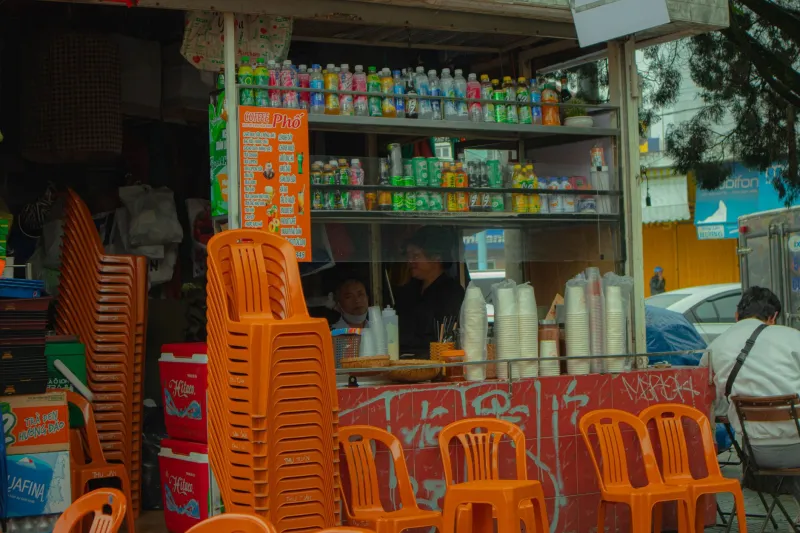
Walk down a residential lane in Ubud and you'll pass something that looks less like a restaurant than a neighbor's front room with a few plastic chairs out front. A handwritten menu lists maybe five items. One cook works the stove. A regular waves from the corner table. That is a warung, and it is not a scaled-down version of a big restaurant. It is a different operating system.
For American home bakers, cottage-food cooks, and micro-restaurant hopefuls, the warung model is worth studying in 2026—not because Bali is a regulatory paradise, but because it shows how little a food business can need if it is built on repetition, trust, and a tight menu. The lesson is not to ignore permits or food safety. The lesson is to stop confusing size with seriousness.
The menu is not the business plan
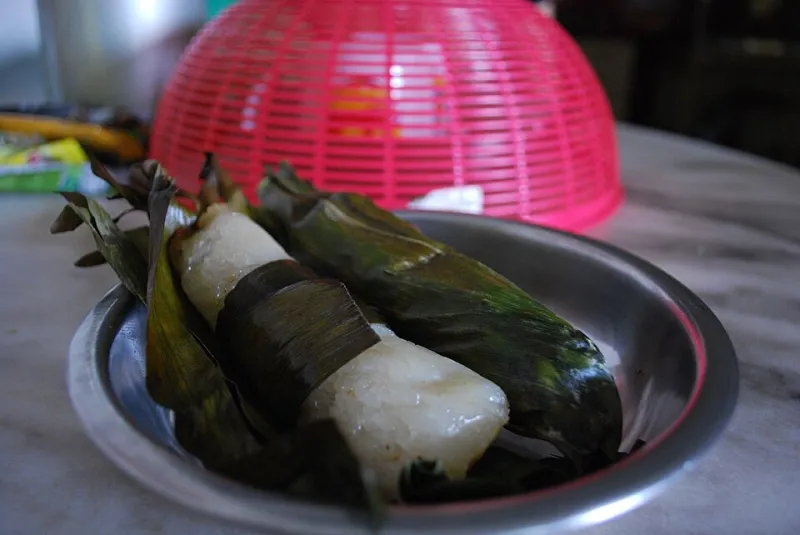
A warung often does three to six things well: a plate of rice with a few sides, a noodle soup, grilled satay, maybe a daily vegetable. The cook repeats those dishes until the motions are muscle memory. Ingredients overlap. Prep is predictable. Waste stays low because the same components show up in different forms.
American food entrepreneurs often do the opposite. A home baker launches with twelve cupcake flavors. A pop-up cook writes a twenty-item menu to prove they can cook. A farmers market stand tries to be a full restaurant in a tent. The result is impressive on Instagram and exhausting in the kitchen.
The warung lesson is not to be boring. It is to make repetition your quality-control system. Pick dishes that share a shopping list and a prep list. If you sell at a farmers market, build your stand around one base—say, a coconut-turmeric rice bowl—and change the topping weekly. Keep the core stable enough that neighbors know what they are coming back for.
Overhead is a design choice
A warung may operate out of a front room, a roadside stall, or a small rented kitchen with no host stand, no delivery-app commission, and no dining room built on borrowed money. That is not automatically better or safer, but it is a useful contrast to the American habit of starting with a build-out.
In the US in 2026, there are more ways to test a food business before signing a lease: commissary kitchens, shared prep spaces, church kitchens, food trucks, farmers market stalls, preorder pickups, and cottage-food operations where state law allows them. Cottage-food rules vary widely. Some states cap revenue, require labels, limit where you can sell, or restrict what kinds of food are allowed. None of that is a national blank check. But the principle holds: do not build a dining room before you have demand.
A weekly preorder menu can be a real business. A pickup window can be a real business. A shared kitchen slot can be a real business. The warung approach says: prove the food in public first, then add the chairs.
Trust compounds faster than followers
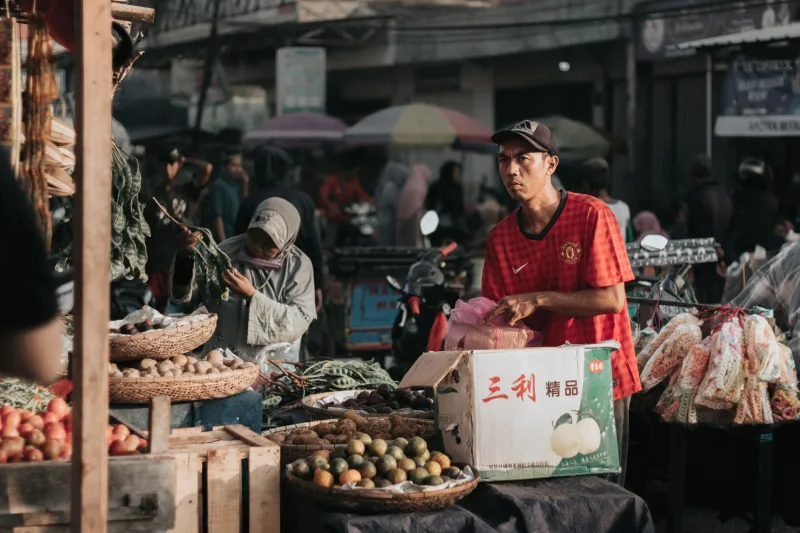
In Bali, regulars do not just like the food. They know the cook. They know whose warung is reliable, whose sambal is too sweet, and who will still be open when the rain starts. That kind of accountability is hard to fake and hard to scale.
American micro-food businesses can recreate some of it through consistency. Same pickup spot. Same weekly menu. Same face behind the counter. A neighborhood text list may matter more than a big follower count. A church basement pop-up may teach you more than a sponsored post. Reputation is local first, and local reputation is built by showing up on time with food that tastes the same as it did last week.
What Americans can borrow—and what we can't
We can borrow menu discipline, low overhead, repetition, and neighborhood accountability. We should not pretend the regulatory and labor realities are the same. Bali's informal food economy has its own risks and inequalities. The US requires permits, inspections, food handler training, labeling, and sometimes insurance. That is not red tape to romanticize away. It is part of building trust at a larger scale.
Use cottage-food rules where they fit. Move into a licensed kitchen as you grow. Ask your local health department questions before you fall in love with a concept. The warung model is not an argument for cutting corners. It is an argument for not adding corners you do not need.
Start smaller than feels impressive
The warung next door is not a fantasy of escaping the restaurant industry. It is a reminder that food businesses can begin as relationships. In 2026, with commercial rents high and delivery apps taking a cut, the smallest viable food business may be a weekly preorder menu, a shared kitchen slot, and thirty neighbors who know your name. That is not a lesser version of a restaurant. It is a start.